

26 Jul Microneedling in Montreal: Benefits, Recovery & Results
Microneedling is often discussed as a treatment for everything from enlarged pores to acne scars. Its real value is more specific: it creates controlled micro-injuries that prompt a wound-healing response in the skin. Over time, that response may support collagen and elastin remodelling and improve certain types of texture irregularity.
Because the changes develop gradually, microneedling is better understood as a process than as an instant-refresh facial. Knowing what happens during treatment, what recovery can look like, and which concerns tend to respond helps set useful expectations.
How microneedling works
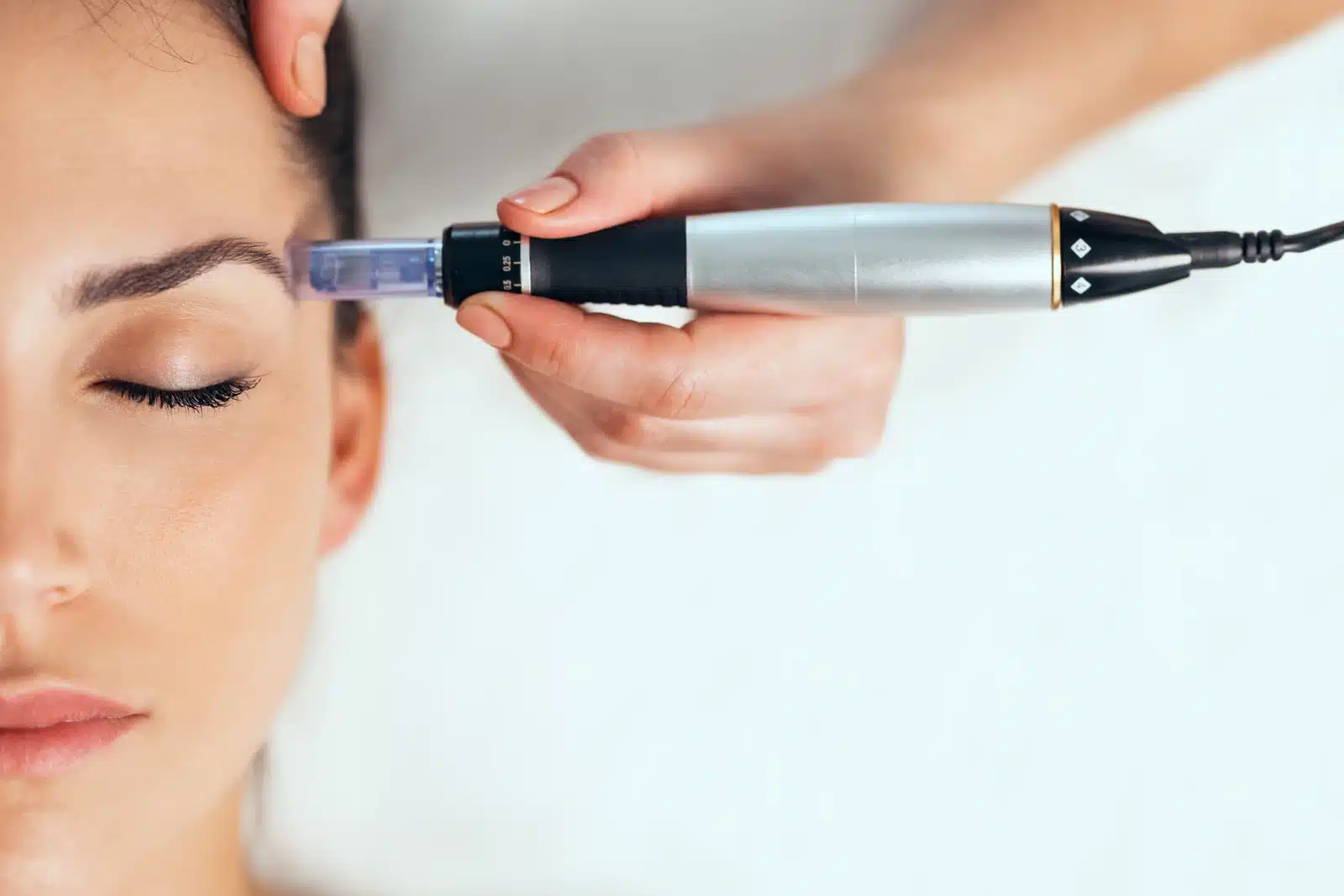
A professional device uses fine, sterile needles to create many small channels in the skin. The depth and technique can be adjusted according to the treatment area, concern, and skin tolerance. These controlled channels initiate a repair process without surgically removing skin.
Microneedling is commonly considered for uneven texture, the appearance of some acne scars, fine lines, and general skin quality. It may also make pores look less noticeable as texture becomes more even, although it cannot permanently change the biological size of a pore.
Not all scars respond in the same way. Shallow textural irregularities differ from deep or tethered acne scars, and a client with significant scarring may need a different procedure or a combination approach. An assessment is important before assuming microneedling alone will achieve the desired change.
What the appointment feels like
The skin is cleansed and prepared before the device is passed across the treatment area. Sensation varies by area and treatment depth; clients often describe pressure, vibration, or a prickling feeling. Treatment protocols and the use of topical numbing products depend on the service and provider.
Temporary pinpoint bleeding can occur with some settings, but more visible treatment is not necessarily better treatment. The aim is a controlled response suited to the skin—not maximum irritation.
Recovery after microneedling
Redness and warmth similar to a sunburn are common immediately afterward. Mild swelling, tightness, sensitivity, dryness, or light flaking may follow. These effects often settle over several days, but recovery differs with treatment intensity and individual reactivity.
During the early healing period, simple care is usually preferable. Clients may be advised to pause exfoliating acids, retinoids, scrubs, and other potentially irritating products. Picking or peeling the skin can prolong irritation. Sun protection is particularly important because recently treated skin may be more vulnerable to UV exposure.
Your provider should give instructions specific to the treatment performed. Contact the clinic if you experience symptoms that are severe, worsening, or different from the expected recovery described to you.
When results become visible
Some clients notice smoother or more refreshed-looking skin after the initial redness resolves. Changes associated with collagen remodelling take longer and may continue to develop over several weeks. A series of sessions is often suggested for textural concerns, with spacing that allows the skin to recover between appointments.
The number of treatments cannot be predicted from a generic schedule. It depends on the concern, its severity, skin response, and whether microneedling is being used alone or alongside other care. Maintenance may be discussed, but more frequent treatment is not always better; healing time is part of the process.
Who may need a different option
Microneedling is not suitable in every situation. Active infection, open lesions, an inflammatory flare, impaired healing, or certain medications and health conditions may affect candidacy. A history of abnormal scarring should also be disclosed. Pregnant or breastfeeding clients should discuss elective procedures and product exposure with an appropriate healthcare professional.
Skin tone is another reason for individualized settings and careful aftercare. Microneedling can be used across a range of complexions, but inflammation can contribute to pigment changes in susceptible skin. Conservative technique and diligent sun protection help reduce avoidable risk.
Preparing for a useful consultation
Bring a list of current skincare products and mention recent peels, laser treatments, injectables, prescription products, or prolonged sun exposure. It also helps to explain whether your priority is scars, fine lines, texture, or general rejuvenation. Clear priorities make it easier to determine whether microneedling fits the goal.
Considering microneedling in Montréal? Book a consultation with Milada to review your skin concerns, expected recovery, and whether this treatment is an appropriate option.