

27 Aug LED Light Therapy in Montreal: Does It Really Work for Skin Rejuvenation?
LED light therapy is appealing because it is gentle, non-invasive, and usually requires no recovery period. It is also surrounded by broad claims. Depending on the source, light is said to clear acne, rebuild collagen, erase redness, and reverse aging—all with a few comfortable sessions.
The reality is more measured. Certain wavelengths of light can influence biological activity in the skin, and LED therapy may be useful for selected concerns. Its effect depends on wavelength, dose, treatment schedule, device quality, and the condition being addressed. It is generally best viewed as a supportive treatment rather than a universal solution.
What LED therapy does
LED stands for light-emitting diode. A professional device delivers light at selected wavelengths without removing the surface of the skin. Unlike resurfacing lasers, LED does not intentionally create a thermal injury or ablate tissue.
Different wavelengths interact with the skin differently. Blue light is often used in acne-focused protocols because of its relationship with acne-associated bacteria. Red and near-infrared wavelengths are commonly discussed in connection with inflammation, recovery, and cellular processes involved in collagen support.
Colour alone does not define an effective treatment. Dose and treatment parameters matter, which is one reason a professional system cannot be evaluated simply by comparing how bright it looks with an at-home mask.
What improvement may look like
For acne-prone skin, LED may complement cleansing, appropriate topical care, and other professional services. It does not address every contributor to acne and may be insufficient for deep, painful, or scarring breakouts. Those concerns warrant medical evaluation.
In rejuvenation programmes, LED is used to support skin recovery and gradual improvements in overall appearance. It may help the complexion look calmer or more refreshed, but it should not be expected to reproduce the effects of microneedling, resurfacing procedures, injectables, or surgery.
For redness and sensitive skin, the cause matters. Temporary irritation after a procedure is different from persistent redness caused by an inflammatory or vascular condition. Cosmetic light therapy should not delay diagnosis of symptoms that need medical care.
Why a series is often recommended
LED treatments are relatively gentle, so their effects are usually cumulative rather than dramatic after one session. A series may be recommended, followed by occasional maintenance, depending on the goal and response.
There is no meaningful universal number of sessions. Frequency should reflect the device protocol and treatment objective. If LED is added to another facial, it should serve a defined purpose rather than functioning as an unexplained upgrade.
Safety and eye protection
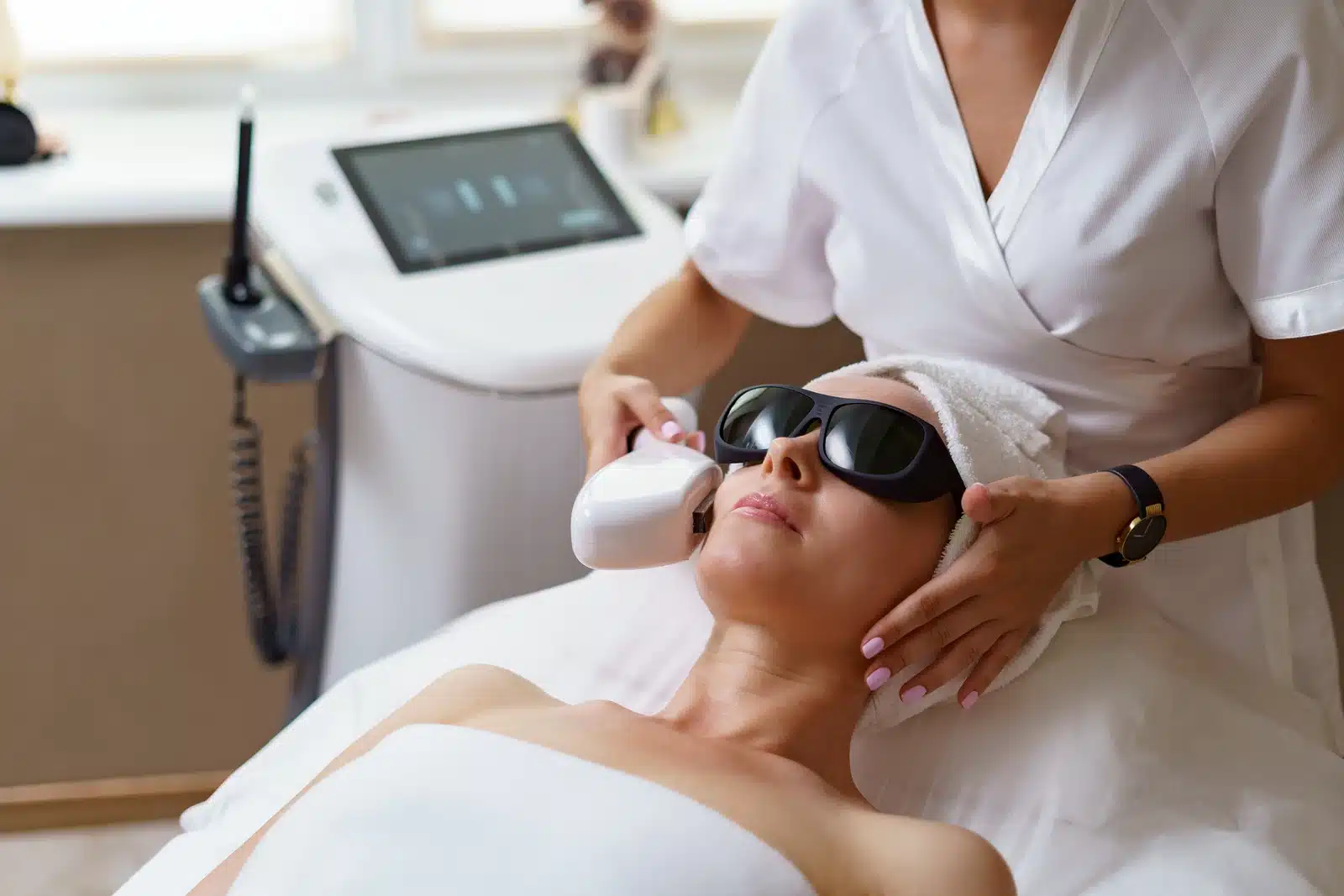
LED does not involve the same mechanism as UV tanning light, but appropriate use still matters. Eye protection should follow the device manufacturer’s protocol. Photosensitizing medications, light-sensitive conditions, seizure disorders triggered by light, and relevant medical history should be discussed before treatment.
Clients should also disclose active skin conditions and recent procedures. Although LED is often well tolerated, “non-invasive” does not mean that screening can be skipped.
Professional LED versus home devices
Home masks vary widely in wavelength, output, fit, treatment time, and quality. Their convenience can be useful, but they should not be assumed to match a professional system. More frequent use is not necessarily better, and manufacturer instructions should be followed.
A professional appointment has the advantage of skin assessment and integration with other care. It also allows the provider to determine whether light therapy is relevant to the goal or whether the time and budget would be better directed elsewhere.
Does it really work?
LED therapy can have a worthwhile role when the indication is appropriate and expectations are proportionate. Its strengths are comfort, minimal interruption to daily life, and the ability to complement other skincare services. Its limitation is that subtle, progressive support is not the same as major structural change.
Interested in LED light therapy in Montréal? Book a consultation with Milada to find out whether luminotherapy belongs in your skincare plan.